In short
The life of galvanized sheet depends on the zinc thickness and the corrosivity of its environment. Z275 sheet carries about 19 µm of zinc per side; by ISO 9223 zinc loss rates this lasts roughly 9–28 years in a medium (C3) environment and longer in rural air. The often-quoted 10–70 years applies to thick batch galvanizing.
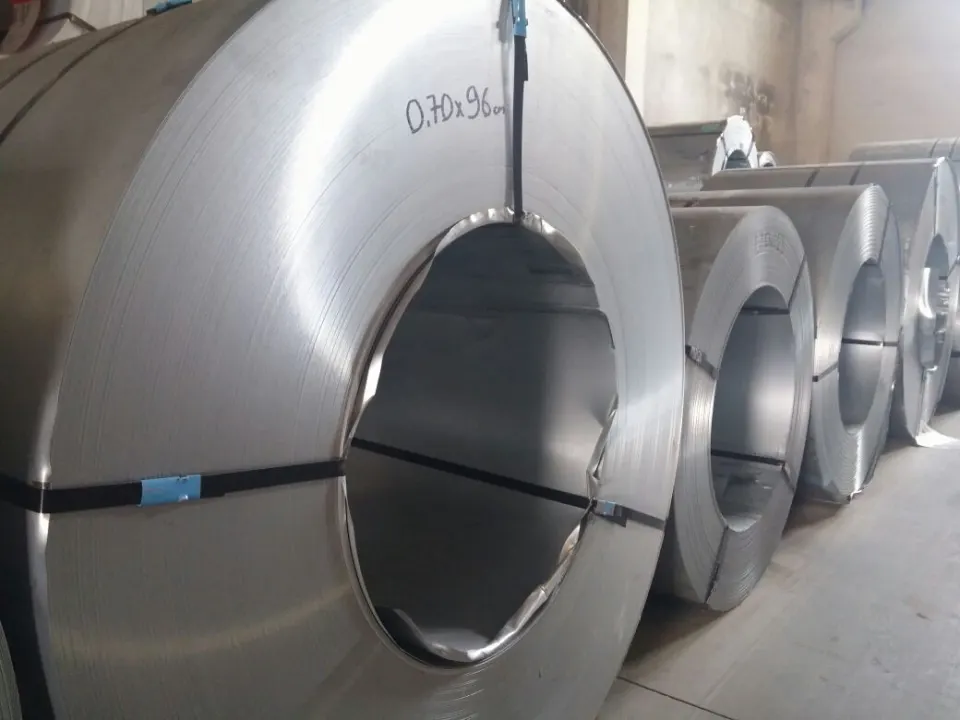
Short answer
The life of galvanized sheet depends on two things: the thickness of the zinc coating and the corrosivity class of its environment. Zinc wears away at a certain rate each year; until the coating is consumed, the steel underneath does not rust. Life can therefore be estimated as zinc thickness per side ÷ annual zinc loss.
Why "10–70 years" does not apply to every galvanized product
The 10–70 year life often quoted online refers to batch hot-dip galvanizing, where fabricated steel parts are dipped one by one. Under EN ISO 1461 the mean coating on steel thicker than 6 mm is at least 85 µm. Continuously galvanized sheet has a much thinner coating: about 19 µm per side for Z275. Judging sheet by batch-galvanizing figures is therefore misleading. For coating thicknesses by class, see the Z100–Z275 guide.
Estimated life by environment and coating class
ISO 9223 classifies atmospheres into corrosivity categories and gives a first-year corrosion range for zinc in each. The table divides these ranges into the zinc thickness per side of each coating class to show the approximate time until the coating is consumed:
| Environment (ISO 9223) | Zinc loss (µm/year) | Z100 (years) | Z140 (years) | Z200 (years) | Z275 (years) |
|---|---|---|---|---|---|
| C2 · Low: rural, clean air | 0.1–0.7 | 10–50+ | 14–50+ | 20–50+ | 28–50+ |
| C3 · Medium: urban, light industry, away from the coast | 0.7–2.1 | 3.3–10 | 4.7–14 | 6.7–20 | 9.2–28 |
| C4 · High: industrial areas, coastal strip | 2.1–4.2 | 1.7–3.3 | 2.3–4.7 | 3.3–6.7 | 4.6–9.2 |
| C5 · Very high: heavy industry, seafront | 4.2–8.4 | 0.8–1.7 | 1.2–2.3 | 1.7–3.3 | 2.3–4.6 |
The table is an estimate, not a guarantee. Zinc corrosion usually slows after the first years; on the other hand cut edges, laps and places where water collects are affected faster. Distance to the sea, industrial gases and how long water stays on the surface determine the real life.
Does galvanized sheet rust?
As long as the zinc coating is intact, the steel does not rust. Zinc protects in two ways: by covering the steel (barrier) and, where there is a scratch or cut, by corroding itself first (cathodic protection). Small scratches and cut edges therefore usually do not rust quickly. When the coating is eventually consumed, the steel starts to show red rust; red rust on a galvanized surface means the zinc is gone in that area.
What is white rust?
White rust is the white, powdery staining that forms on galvanized surfaces; it is zinc hydroxide. It appears when tightly stacked sheet bundles or coils get wet, or when condensation forms between sheets. In open air, zinc forms a protective zinc carbonate film with carbon dioxide; between sheets pressed together, air cannot reach the surface, the film cannot form and white rust starts.
- Prevention: store sheet dry and ventilated, raised off the ground and slightly inclined; do not seal it under tarpaulins where condensation forms. Open and dry any bundle that gets wet.
- Passivation: passivation applied at the mill adds protection against white rust during storage but does not replace correct storage.
- If it forms: light white rust can be removed with a stiff nylon brush; a matt mark may remain. If bare steel shows under the stain, repair the area with zinc-rich paint.
How to extend service life
- A heavier coating: choosing Z275 outdoors gives roughly three times the zinc of Z100.
- A paint system: zinc and paint together last longer than the sum of their separate lives. Factory pre-painted steel or paint applied later serves this purpose; see the painting galvanized steel guide.
- Design: slopes that shed water, protected cut edges and no contact with dissimilar metals such as copper.
State your project environment in your quote request and we will help choose the right coating class: request a quote.
This article was prepared by the İpek Metal technical team. Contact us for values specific to your project.