In short
Trapezoidal sheet is fixed with self-drilling roofing screws with EPDM washers, most often 6.3 mm in diameter. Screw length = purlin wall + sheet or panel thickness + at least 10 mm; sources usually recommend 5–8 screws per m². Roof pitch (%) = rise ÷ run × 100; the minimum pitch for trapezoidal sheet is usually given as 5–10% depending on the profile.
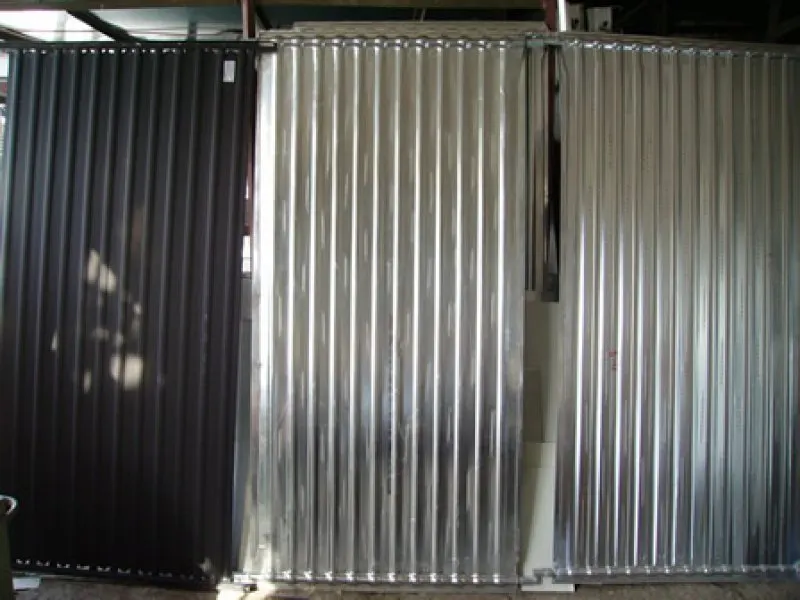
What is a trapezoidal sheet screw?
Trapezoidal sheet and sandwich panels are fixed to purlins with self-drilling roofing screws with EPDM washers. The drill point drills the sheet and steel purlin without a pilot hole; the metal washer and EPDM seal under the head make the hole watertight. These screws are DIN 7504-K type and corrosion-protected.
Choosing screw diameter and length
- Diameter: 6.3 mm is the most common for trapezoidal sheet and panels; 5.5 mm is also used for light work.
- Length: the screw must be longer than all fixed layers: purlin wall + sheet (or panel) thickness + at least 10 mm. 6.3 × 25 or 6.3 × 32 mm is common for single-skin sheet; for sandwich panels length increases markedly with panel thickness.
- Drilling capacity: the steel thickness the drill point can drill must exceed the purlin wall thickness. Use longer-point screws on thick steel purlins.
- Timber purlins: use pointed roofing screws made for timber instead of self-drilling steel screws.
How many screws per square metre?
Sources usually recommend 5–8 screws per m². The exact number depends on purlin spacing, panel width, wind load and building location: roof edges, corners and the ridge area are more exposed to wind suction, so screw density is increased there. On large roofs the fixing pattern should come from the structural design.
Fixing tips
- Correct torque: tighten until the EPDM washer spreads slightly. Under-tightened screws leak; over-tightened screws crush the washer and dent the sheet. Use a torque-limited screwdriver.
- Square to the surface: drive screws perpendicular; angled screws prevent the washer from seating.
- Screw position: on roofs the common practice is to fix through the rib crest rather than the pan where water flows. For some deep profiles the manufacturer may specify pan fixing; follow the profile installation sheet.
- Remove swarf: drilling swarf left on the surface rusts and stains painted and galvanized sheet. Sweep the roof after installation.
- Side lap: adjacent panels overlap by at least one rib; laps can be stitched together with stitching screws.
What is roof pitch and how is it calculated?
Roof pitch is how much a roof rises relative to its horizontal run, usually given as a percentage:
Pitch (%) = Rise ÷ Run × 100 · Angle (°) = arctan(Pitch ÷ 100)
Example: a roof slope with a 6 m horizontal run rising 0.6 m at the ridge has a pitch of 0.6 ÷ 6 × 100 = 10%, about 5.7°. The true sloped length (panel length) is √(6² + 0.6²) ≈ 6.03 m, plus the eaves overhang.
| Pitch (%) | Angle | Rise per 1 m run |
|---|---|---|
| 5% | 2.9° | 50 mm |
| 7% | 4.0° | 70 mm |
| 10% | 5.7° | 100 mm |
| 15% | 8.5° | 150 mm |
| 20% | 11.3° | 200 mm |
| 30% | 16.7° | 300 mm |
| 50% | 26.6° | 500 mm |
Minimum roof pitch for trapezoidal sheet
Trapezoidal sheet is not used on flat roofs; water must run off quickly. Sources usually give a minimum pitch of 5% to 10% for single-skin trapezoidal sheet. The real lower limit depends on rib height, side and end lap details and whether panels have end laps: low-rib profiles and roofs with end laps need more pitch. As pitch decreases, increase the lap and use sealing tape in the laps. Use the manufacturer's data sheet for the profile; for very low pitches consider standing-seam or membrane systems.
Related guides
- Trapezoidal sheet sizes and profile types
- Trapezoidal sheet weight calculator
- Trapezoidal roofing sheet and sandwich panels
This article was prepared by the İpek Metal technical team. Contact us for values specific to your project.