In short
Galvanized sheet is steel coated with zinc to protect it from corrosion. Hot-dip galvanizing is the most common method; the coating provides both barrier and cathodic protection.
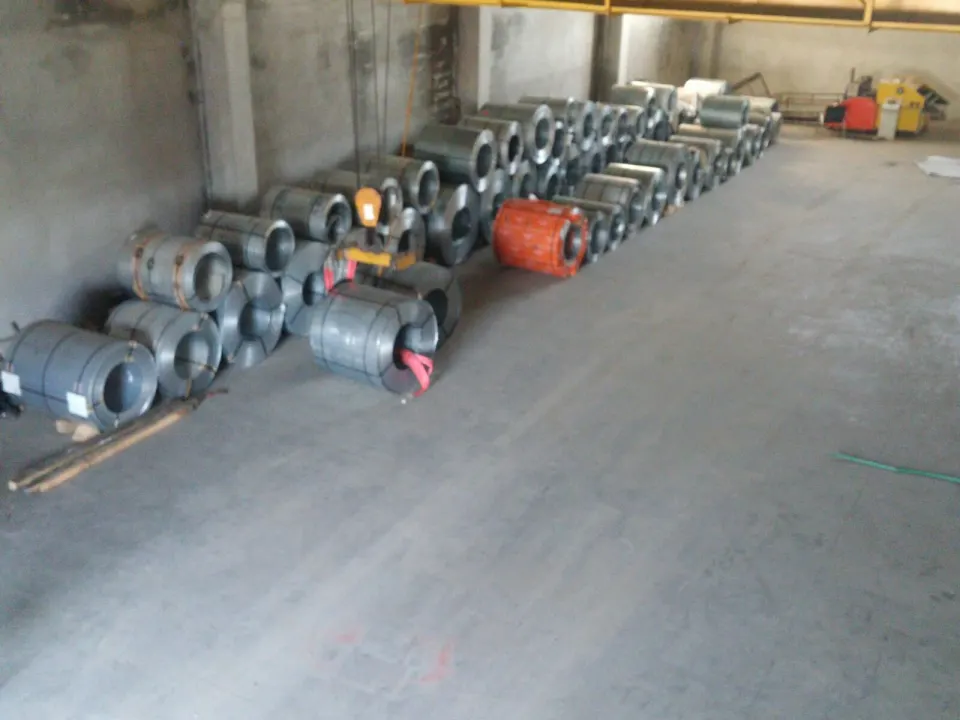
Definition
Galvanized sheet is steel sheet whose surface is coated with a thin layer of zinc. Because zinc is more active than steel, it corrodes first even when the surface is scratched, protecting the steel underneath. This is called cathodic protection.
What does galvanizing mean?
Galvanizing is coating steel with zinc to protect it from corrosion; galvanized sheet is sheet that has been through this process. The word comes from the Italian scientist Luigi Galvani, who worked on electricity and metals in the 18th century. Hot-dip galvanizing was patented in the first half of the 19th century, and continuous lines that galvanize sheet as coil without interruption became widespread in the 20th century.
How is it produced?
- Cold-rolled steel strip is surface-cleaned.
- It is annealed to the required mechanical properties.
- It passes continuously through a molten zinc bath at about 450 °C.
- Air knives set the coating thickness (Z100–Z275, etc.).
- Passivation and oiling complete the surface protection.
Galvanizing methods
| Method | How it is done | Coating | Typical use |
|---|---|---|---|
| Continuous hot-dip (galvanized sheet) | Coil runs continuously through molten zinc (EN 10346) | Thin and uniform; about 19 µm per side for Z275 | Sheet, coil, trapezoidal sheet, panels, HVAC |
| Batch hot-dip | Fabricated steel parts are dipped one by one (EN ISO 1461) | Thick; mean at least 85 µm on steel over 6 mm | Structural steel, railings, poles, fasteners |
| Electrogalvanizing | Zinc is deposited electrolytically | Very thin and smooth | Automotive and appliance parts to be painted, indoor use |
| Cold galvanizing | A paint containing zinc dust is brushed or sprayed | A paint film, not a true coating | Repair of cut edges, welds and damage |
Key properties
| Property | Typical value |
|---|---|
| Standard | EN 10346 |
| Thickness | 0.30 – 3.00 mm |
| Coating | Z100 – Z275 g/m² |
| Grade | DX51D+Z … DX54D+Z, S220GD+Z … S350GD+Z |
Applications
- HVAC ducting and air-conditioner casings
- Roof, wall and trapezoidal panels
- Steel profiles and light-gauge steel structures
- Home appliances and electrical enclosures
- Agricultural equipment and greenhouse structures
Limits of galvanized sheet
- Acidic and strongly alkaline environments: zinc is stable in near-neutral conditions; it corrodes quickly in acid fumes, fertiliser and chemical storage. Consider a paint system or another material there.
- Continuous high temperature: galvanized coatings start to deteriorate at continuous temperatures above about 200 °C; they are not suitable for flues and ovens.
- Welding and cutting: galvanized sheet can be welded, but heated zinc vaporises. Ventilate well and use suitable respiratory protection; repair the burnt coating at the weld with zinc-rich paint.
- Contact with other metals: damp contact with metals such as copper, and run-off from copper pipes, accelerates zinc loss.
Conclusion
With the right grade and coating class, galvanized sheet resists corrosion for many years even without paint. The application environment and forming requirements should be considered together when choosing.
Coating thickness directly determines corrosion life; for estimated life by environment see how long galvanized steel lasts, and for how galvanized sheet differs from black and cold-rolled sheet see the sheet types comparison.
This article was prepared by the İpek Metal technical team. Contact us for values specific to your project.